What are lasers? A laser is a device that produces a narrow, intense beam of light at a single wavelength. The word laser is an acronym for Light Amplification by Stimulated Emission of Radiation. Unlike a flashlight, which spreads light in many directions and colors, a laser sends coherent light along one path, which lets it mark, engrave and cut with precision.
This guide answers what lasers are and how they work. First, you will learn the key parts of a laser. Then you will see the main types used in marking machines and why the right wavelength matters for your material. When you finish, browse our laser marking machines or contact our team for a sample test.
The 30-second answer
- A laser is a source of focused, single-color, coherent light.
- It works by amplifying light inside an optical cavity and releasing it as one beam.
- Then, in marking machines, the beam heats, melts or removes a thin layer of material to leave a permanent mark.
What are lasers, in simple terms?
Think of a laser as the opposite of a light bulb. A light bulb scatters many colors in all directions, while a laser gathers light of one color and sends it in a nearly parallel beam. Because the energy stays concentrated, even a modest laser can mark hard materials such as metal, glass and ceramic.
The light also stays in step, a property called coherence. As a result, the laser can focus to a tiny spot and deliver a clean, repeatable mark. For a deeper technical definition, see the overview of lasers on Wikipedia.
How do lasers work?
Every laser follows the same basic process. First, it pumps energy into a material. Then the material emits photons, and the cavity amplifies them into one beam. The three main parts are the gain medium, the pump source and the optical cavity.
- Gain medium: the material that produces the light. It can be a crystal, a gas, a fiber or a semiconductor.
- Pump source: the energy input, usually electricity, a lamp or another laser.
- Optical cavity: two mirrors that bounce the light back and forth so it builds up in strength.
When the pump source energizes the gain medium, electrons move to a higher energy state. As they drop back down, they release photons. In turn, those photons stimulate nearby atoms to release identical photons, and the cavity amplifies the effect until one beam escapes through a partially reflective mirror.
The properties that make lasers useful
Three properties set laser light apart and make it the right tool for marking and engraving.
- Monochromatic: one narrow wavelength, which means predictable results on a given material.
- Coherent: the light waves travel in step, so they can focus to a tiny, high-energy spot.
- Directional: the beam spreads very little, so it stays accurate across the working area.
In short, these three properties explain why a laser can mark a data matrix code smaller than a fingernail and keep it readable for years.
Main types of lasers used in marking
Different materials absorb different wavelengths, so marking machines use different laser sources. The three most common are fiber, CO2 and UV.
| Laser type | Wavelength | Best materials | Typical use |
|---|---|---|---|
| Fiber | 1064 nm | Metal, coated metal | Serial numbers, logos, traceability |
| CO2 | 10.6 µm | Wood, acrylic, leather, glass, paper | Engraving and cutting |
| UV | 355 nm | Plastic, glass, sensitive surfaces | Fine, low-heat marking |
Fiber lasers are the default for metal. Meanwhile, CO2 lasers cover organic materials, and UV lasers produce very little heat, which protects plastics and delicate parts. For example, you can compare our fiber laser machines, CO2 laser machines and UV laser machines. If you are choosing between metal and non-metal, read our Fiber vs CO2 laser guide before you buy.
Continuous wave vs pulsed lasers
Lasers deliver energy in two main ways. A continuous wave, or CW, laser emits a steady beam. In contrast, a pulsed laser releases energy in short bursts. Pulsed lasers build up energy and release it in a quick spike, so they mark a surface without heating the surrounding area as much.
Most fiber and UV marking machines use pulsed output because the short bursts give a clean mark with low heat. On the other hand, CO2 machines often run in continuous wave mode for smooth engraving and cutting. Finally, the pulse mode is one of the settings a technician tunes for each material.
Marking vs engraving vs cutting
When people ask what are lasers used for, the answer usually falls into marking, engraving or cutting. Marking changes the color or removes a thin coating without changing the shape. Engraving removes a small amount of material to leave a visible groove, while cutting passes through the full thickness of the sheet. Because of this, marking uses the least energy and is fastest, and cutting uses the most.
Most marking machines handle marking and light engraving. For example, a higher-power CO2 machine can cut thin wood and acrylic, while a fiber laser focuses on surface marks on metal.
What are lasers used for?
Lasers appear across industry, medicine and manufacturing. Manufacturing uses them to mark, engrave, cut, weld and clean. Medicine uses them to cut tissue and correct vision, while electronics brands PCBs and components. In short, for most businesses, the practical question of what are lasers used for comes down to one job: turning a bare part into a finished, traceable product.
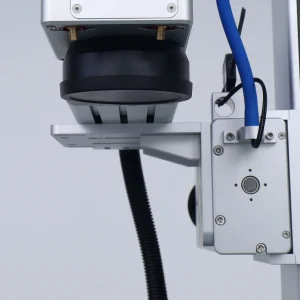
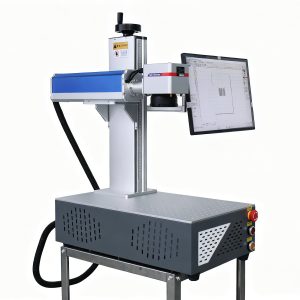
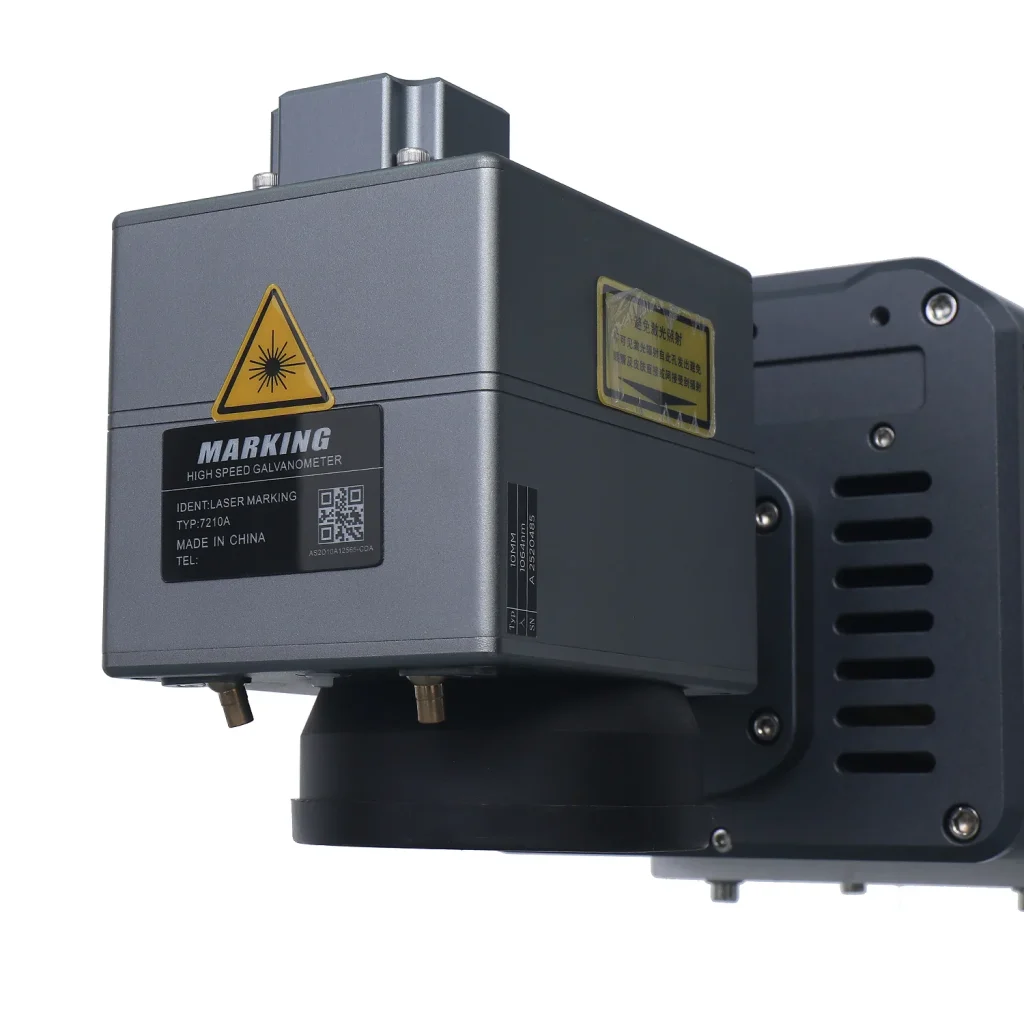
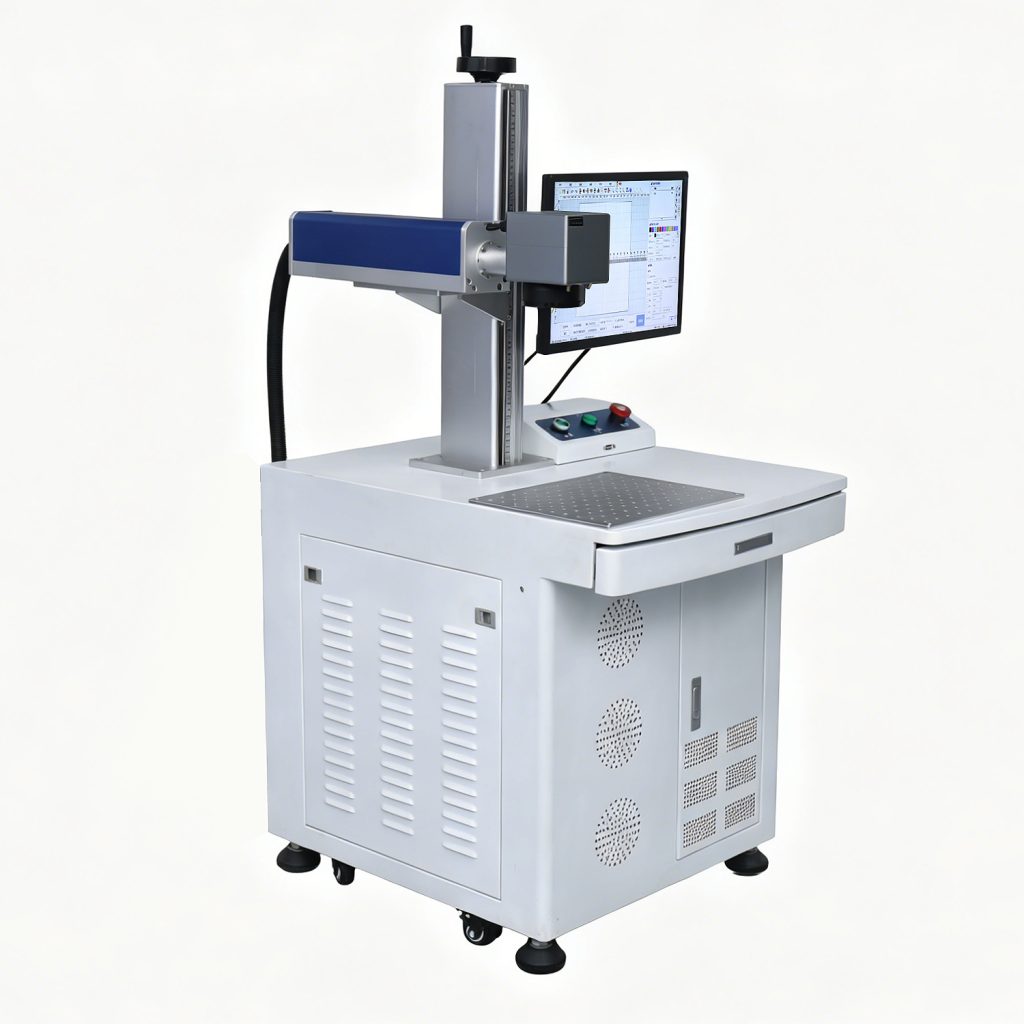
In a marking machine, the laser moves across the part with a galvo scanner, which steers the beam with mirrors. The beam changes the surface color, removes a coating, or engraves a small depth into the material. As a result, the part keeps a permanent mark with no ink, labels or contact.
Why wavelength matters
Wavelength decides whether the material absorbs or reflects the beam. Metal absorbs the 1064 nm fiber wavelength strongly, while wood barely responds. Likewise, wood and acrylic absorb the 10.6 µm CO2 wavelength, but bare metal reflects most of it. Consequently, choosing the wrong wavelength is the most common beginner mistake.
For a quick reference on which source fits which material, check our material settings library. It maps common materials to the recommended laser type and starting settings.
Laser safety basics
Laser beams carry concentrated energy, so manufacturers build and classify machines with safety in mind. The main rules are simple: use the enclosure or protective housing, never look directly at the beam, and keep reflective objects out of the beam path. Most enclosed marking machines are Class 1 systems, so the enclosure keeps the beam fully contained during normal operation.
Always treat any open-beam setup with care and use the correct safety glasses for the wavelength in use. A properly enclosed machine handles most of the risk automatically.
Frequently Asked Questions
What are lasers made of?
A laser is not one material. Instead, a gain medium, a pump source and an optical cavity make up the system. The gain medium can be a doped fiber, a gas tube, a crystal or a semiconductor, and it changes the wavelength and power of the output.
Are all lasers the same color?
No, because the wavelength sets the color. Infrared fiber lasers are invisible, CO2 lasers are far infrared, and UV lasers sit beyond visible violet light. Meanwhile, some visible lasers, such as green and red pointers, handle alignment and low-power work.
Why do different lasers mark different materials?
Materials absorb specific wavelengths. For example, metal absorbs the 1064 nm fiber wavelength, while wood and acrylic absorb the 10.6 µm CO2 wavelength. As a result, matching the source to the material gives a clean, high-contrast mark.
What are lasers used for in a marking machine?
A marking laser creates permanent text, logos, serial numbers and data matrix codes on the surface of a part. It works without ink or labels and produces a mark that lasts the life of the part.
Ready to see a laser mark on your part?
What are lasers good for in your shop? They turn a plain part into a branded, traceable product in seconds, with no consumables and very little maintenance. So, tell us what you mark and we will recommend a source, power and working area, then run a sample on your own material. Finally, browse the full machine range or contact our team today.