UV Laser Marking Machines
Cold 355nm marking for plastics, glass, packaging and fine parts. Low heat effect, clean contrast and precise results.
Sample marking and material advice before you order. Shipping worldwide.
Best for, and what to avoid
Best for
- Plastics, glass and fine parts
- Packaging date and batch codes
- Electronics and small components
Not the best fit
- Deep metal engraving (use fiber)
- Wood and acrylic (use CO₂)
- Large-area high-speed metal marking
Typical production
- Desktop low-heat marking
- Inline marking on a production line
- Fine text and small codes
What this series can mark
Short clips from real marking jobs. Final contrast and cycle time depend on the material, surface finish and settings.
What you can mark, and how
| Material | Recommended source | Typical result | Notes |
|---|---|---|---|
| Plastics | UV | No melting, no distortion | Low heat effect |
| Glass | UV | Fine, repeatable mark | Cold marking |
| Packaging | UV | Clean date and batch codes | Coated and film |
| Electronics | UV | Fine marking on small parts | Water-cooled source |
| Coated surfaces | UV | Clean contrast | Confirm coating |
| Bare metal | Fiber | Permanent mark | UV limited on metal |
Choose a model
Select a configuration to see its specifications, or compare every model in the table below. Final configuration and price are confirmed in the quotation.
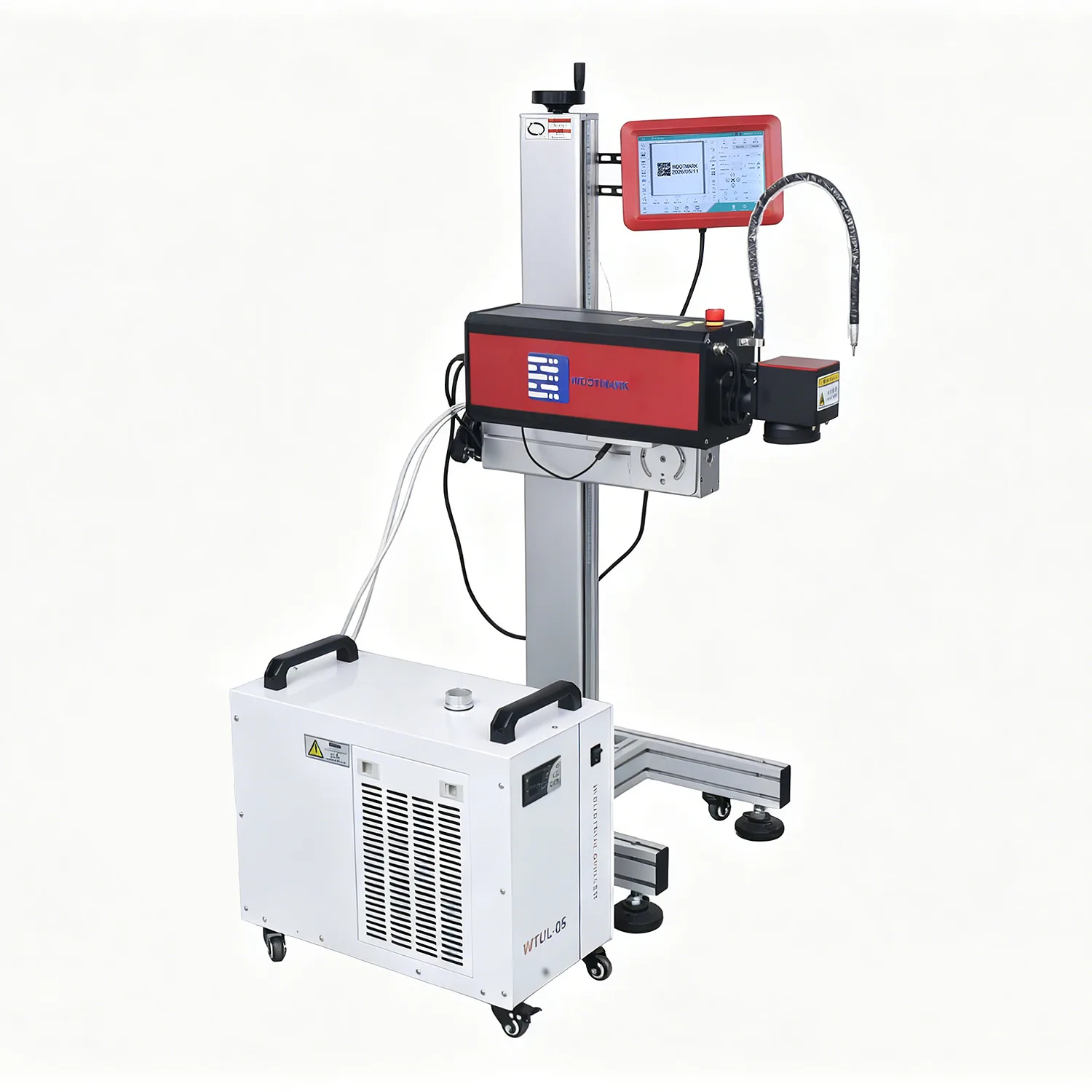
| Model | Group | Power | Laser source | Marking range | Speed | Best for |
|---|---|---|---|---|---|---|
| T-U5 CRS | Desktop UV | 5W | CRS | 110 × 110 mm (options available) | ≤ 7,000 mm/s | Entry-level UV marking for plastics and packaging. |
| T-U10 CRS | Desktop UV | 10W | CRS | 110 × 110 mm (options available) | ≤ 7,000 mm/s | Higher-throughput UV marking and fine industrial parts. |
| T-U5 JPT | Desktop UV | 5W | JPT | 110 × 110 mm (options available) | ≤ 7,000 mm/s | Stable, fine UV marking for demanding plastic parts. |
| T-U10 JPT | Desktop UV | 10W | JPT | 110 × 110 mm (options available) | ≤ 7,000 mm/s | High-precision UV marking with greater throughput. |
| YT-U5 CRS | Flying UV | 5W | CRS | 110 × 110 mm (options available) | ≤ 12,000 mm/s | Inline UV marking for packaging and moving products. |
| YT-U10 CRS | Flying UV | 10W | CRS | 110 × 110 mm (options available) | ≤ 12,000 mm/s | High-speed inline UV marking on production lines. |
| YT-U5 JPT | Flying UV | 5W | JPT | 110 × 110 mm (options available) | ≤ 12,000 mm/s | Precise inline UV marking for fine packaging and parts. |
| YT-U10 JPT | Flying UV | 10W | JPT | 110 × 110 mm (options available) | ≤ 12,000 mm/s | High-power inline UV marking for demanding production. |
Backed from sample to support
Common questions
Why choose UV over fiber for plastics?
UV marks at 355 nm with a low heat effect, so thin plastics do not melt or distort. Fiber is hotter and mainly for metal.
Does a UV laser need a chiller?
Yes. UV sources are water-cooled and ship with a chiller included.
Can it mark glass?
Yes, UV gives a fine, repeatable mark on glass without a heat-affected zone.
Can it deep-engrave metal?
No. For deep metal engraving use a fiber laser. UV is for low-heat surface marking.
Related guides
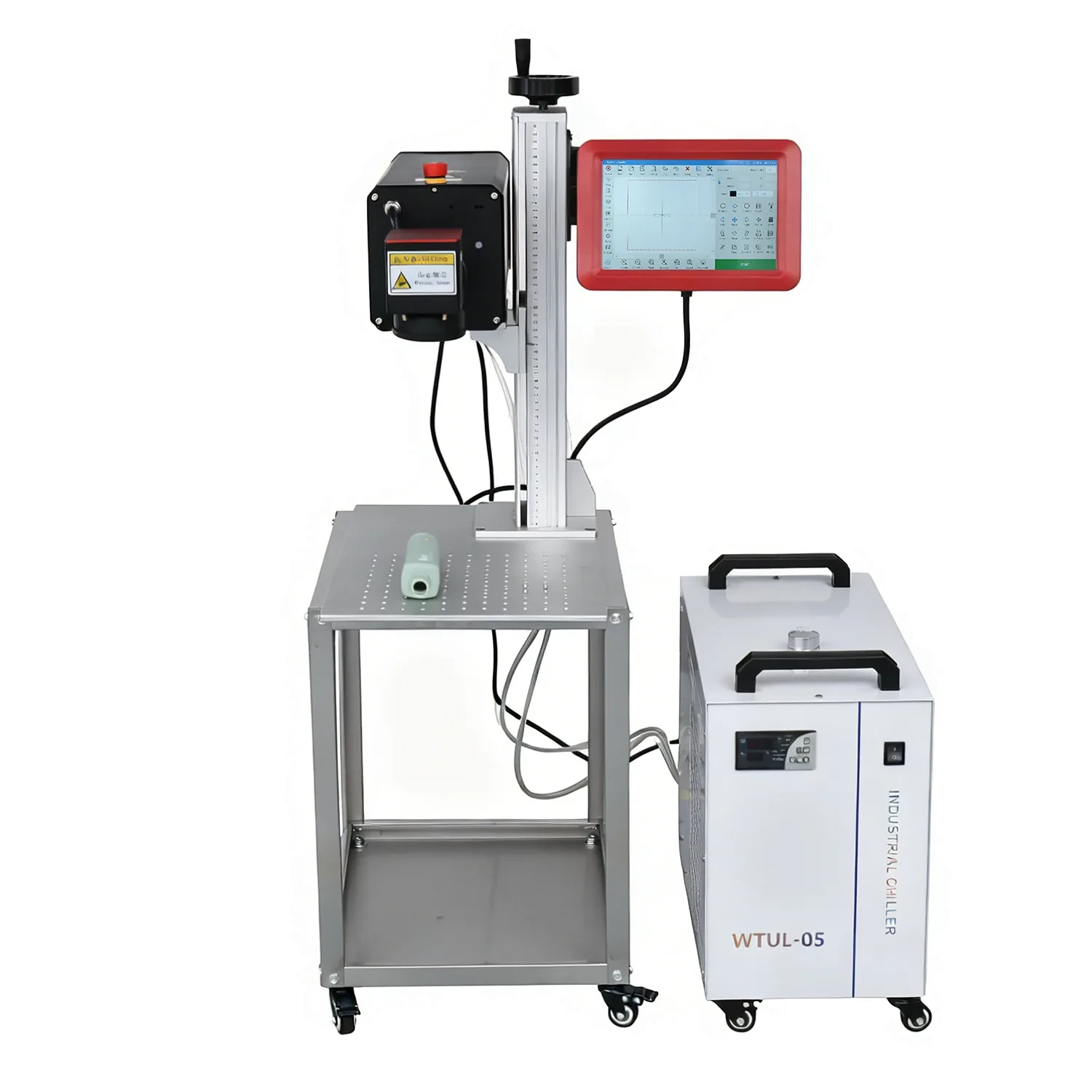
The DOSLASER UV range includes desktop and flying configurations. Desktop UV systems suit flexible work and small parts, while the flying series marks products as they move through a production line. Water cooling with an included chiller keeps the source stable during long runs.
What UV laser marking is best for
- Plastics without melting or distortion
- Glass with a fine, repeatable mark
- Packaging date and batch codes
- Electronics and small components
If you are marking plastics and glass at low heat, read about laser marking technology, then check the material settings library or ask our team for a sample test on your own part.
Water cooling and low heat marking
UV sources run water-cooled with an included chiller, which keeps the 355nm source stable during long production runs. This matters because UV marking is chosen precisely for parts that cannot tolerate heat, so consistent beam output is part of getting a clean result.
If your part is a thin plastic, a coated surface or a small electronic component, a UV test on your sample is the fastest way to confirm the mark quality before you commit.
UV accuracy and part handling
Because UV marking is cold, it suits thin plastics, coated packaging, glass and small electronic parts that would warp or discolour under a hotter process. A water chiller holds the source at a stable temperature, and the small spot size gives fine, repeatable detail on tiny text and codes.
If your work is mixed, review the fiber laser and CO₂ laser pages, or ask us for a sample test on your own material.
Send us your part and mark content
We will confirm the laser source, power and marking area, run a sample, and send a clear quotation with shipping to your door.